ENJOY READING


A 3-Day Short Trip Peak Time Appears
Chinese people will have a three-day "public holiday" on the 15th and 17th — a normal weekend off for 5-day week workers, however...
When Mid-Autumn occurs at the end of September or early October its statutory day of public holiday is usually combined with the statutory
National Day three-day holiday for a seven-day public holiday (October 1–7), sacrificing one adjacent weekend day ( for example, in 2015 people need to work on Saturday, October 10).
Date of Mid-Autumn Day in the Coming Years
| Years | Dates | Day |
|---|
| 2016 | September 15 | Thursday |
| 2017 | October 4 | Wednesday |
| 2018 | September 24 | Monday |
| 2019 | September 13 | Friday |
| 2020 | October 1 | Thursday |
| 2021 | September 21 | Tuesday |
| 2022 | September 10 | Saturday |
Mid-Autumn falls as early as September 8 (2033) and as late as October 6 (2025) in the next 30 years.
Why Mid-Autumn Is Celebrated at Month 8 Day 15
Mid-Autumn Festival celebration
Traditional Calendar Seasons
According to the
Chinese lunar calendar (and traditional solar calendar), the 8th month is the second month of autumn. As the four seasons each have three (about-30-day) months on the traditional calendars, day 15 of month 8 is "the middle of autumn".
For the Full Moon
On the 15th of the lunar calendar, each month, the moon is at its roundest and brightest, symbolizing togetherness and reunion in Chinese culture. Families get together to express their familial love by eating dinner together, appreciating the moon, eating mooncakes, etc. The harvest moon is traditionally believed to be the brightest of the year.
For Harvest Celebration
Month 8 day 15, i
s traditionally the time rice is supposed to mature and be harvested. So people celebrate the harvest and worship their gods to show their gratitude.
The Mid-Autumn Festival or Moon Festival dates back over 3,000 years, to moon worshiping in the Shang Dynasty (1600–1046 BC).
As well as the history below, there are several legends that explain the origin of China's Mid-Autumn Festival in a more fanciful way.
Sacrificing to the Moon
— Earliest Origins as Ancient Worship
Ancient Chinese emperors worshiped the harvest moon at Mid-Autumn, as they believed that the practice would bring them a plentiful harvest the next year.
Sacrificing to moon has various names in different regions of China. It is called ‘worshiping the moon’ in Suzhou of Jiangsu Province, ‘thanking peace’ in Zhenjiang of Jiangsu Province, ‘paying respect to the moon palace’ in Zhenghe of Fujian Province, ‘making wishes to the moon’ in Zhongmou of Henan Province, and ‘worshiping moonlight’ in Sihui of Guangdong Province.
The word 'mid-autumn' first appeared in Zhou Dynasty literature. During that time, worshiping the moon on the 15th night of the eighth month had spread to high officials and rich families. The practice entailed placing a large table in the middle of the yard under the moon, and they put offerings such as fruits and snacks on the table.
The custom of offering sacrifices to the moon originates from worshiping the
lunar goddess, and it was recorded that kings offered sacrifices to the moon in fall during the Western Zhou Dynasty (1045–770 BC). Sacrificing to the moon was very popular in the
Song Dynasty (960–1279), and become a custom ever since.
The sacrificial offerings include apples, plums, grapes, and incense, but mooncakes and watermelons (pomelos in the south) are essential. The watermelon’s (pomelo's) skin is sometimes sliced and opened up into a lotus shape when offered as a sacrifice.
Appreciating the moon with family on the Mid-Autumn Festival.
Appreciating the Moon
— Harvest Moon Feasts Established in the Middle Ages
Appreciating the moon has been a custom since the Tang Dynasty (618–907). Not only the rich merchants and officials, but also the common citizens, began appreciating the moon together at that time. The rich merchants and officials held big parties in their big courts. They drank and appreciated the bright moon. Music and dances were also indispensable. The common citizens just prayed to the moon for a good harvest.
In the early Tang Dynasty the day was officially
celebrated as a traditional festival. It then became an established festival during the Song Dynasty (960–1279), and has become second in popularity to the
Spring Festival since the Ming (1368–1644) and Qing (1644–1911) dynasties.
Eating Mooncakes
— a later addition, helping the overthrow of Mongol occupied China
The tradition of
eating mooncakes during the festival began in the Yuan Dynasty (1271–1368, a dynasty ruled by the Mongols)
.
At the end of Yuan Dynasty the Han people’s resistance wanted to overthrow the rule of the Mongols, so they planned an uprising, but they had no way to inform every Han who wanted to join them of the time of the uprising without being discovered by the Mongols.
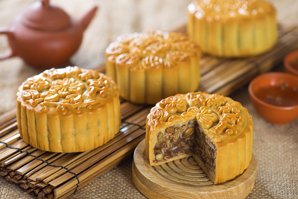
Mooncakes are the most important food of the Mid-Autumn Festival in China.
The military counselor of the Han people’s resistance army, Liu Bowen, thought out a stratagem related to mooncakes. Liu Bowen asked his soldiers to spread the rumor that there would be a serious disease in winter and eating mooncakes was the only way to cure the disease. Then he asked soldiers to write "uprising, at the night of Mid-Autumn Festival" on slips of paper, put them in mooncakes, then sell them to the common Han people.
When the night of the Mid-Autumn Festival came a huge uprising broke out. From then on, people ate mooncakes every Mid-Autumn Festival to commemorate the uprising (though this is little-remembered today).
More Interesting Articles on Mid-Autumn Festival 2016
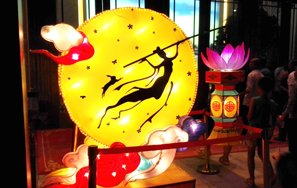
Lanterns of the Mid-Autumn Festival
- The homesick feeling will be stronger during the traditional festival. I want to say that my heart will always be with you no matter where I am.
每逢佳节倍思亲,我想说,无论我身在何处,无论我人在何方,我的心永远和你们在一起!
- The roundest moon can be seen in the autumn. It is time for reunions. I wish you a happy Mid-Autumn Day and a wonderful life.
月到是秋分外明,又是一年团圆日,祝你节日愉快,身体安康
- Sweet cakes will be served with my blessings. Wish you a successful life and a bright future.
送上香甜的月饼,连同一颗祝福的心...愿你过的每一天都象十五的月亮一样成功 !
- Wish you a perfect life just like the roundest moon in Mid-Autumn Day.
愿你的生活就象这十五的月亮一样,圆圆满满
- Happy Mid-Autumn Day! Wish that you go well and have a successful and bright future.
中秋节快乐,万事如意,心想事成!
- I want to make a toast. I Wish that the round moon take my best blessing to you. May you have a happy family and a bright future.
举杯仰天遥祝:月圆人圆花好,事顺业顺家兴。
- I wish that your career and life, just like the round moon on Did-Autumn Day, be bright and perfect.
祝你的事业和生活像那中秋的圆月一样,亮亮堂堂,圆圆满满
- On the night with blooming flowers and a full moon, I want to express my best wishes and blessings. May you have a sweet dream!
花好月圆人团圆,寄去相思和祝愿,幸福快乐好梦圆
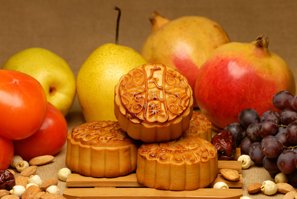
Mooncake, the major food for Mid-Autumn Festival
- Tonight we start the season of white dew. The moon is just as bright as in my homeland. The round moon in the sky makes me feel homesick.
露从今夜白,月是故乡明。今夜月正圆,正是思乡时
- Although I am not around you at this moment, my blessings and wishes will always be around you. Take care, my dearest.
虽然你我不能相聚,但我的思念和祝福伴随你走每一段路。亲爱的,保重!
- I hope the round moon will bring my best wishes to you, my best friend.
月是中秋分外明,我把相思遥相寄!节日快乐,我的朋友
- On this special day, I want to send you a light, faint scent to celebrate your colorful life. Happy Mid-Autumn Day, my best friend.
在这特别的日子里,送一份淡淡的清香,为你洒脱缤纷的祝福!远方的你,中秋节快乐!
must eat--
he Mid-Autumn Festival falls on the 15th day of the 8th lunar month, traditionally China's harvest time. Every home makes various delicious food and good wines to celebrate the festival. Over the centuries the rich and colorful Mid-Autumn Festival diet customs were formed. The most popular Mid-Autumn Festival foods include mooncakes, pumpkin, river snails, taro, wine fermented with osmanthus flowers, duck and hairy crabs.
Mooncake - the must-eat food

Mooncakes
Mooncake is the most popular and important food eaten during the Mid-autumn Festival. Various types of mooncakes are placed in the most prominent places in stores and markets as the festival approaches. Mooncakes are traditionally Chinese pastries which consist of a thin tender skin enveloping a sweet, dense filling. Mooncakes were used to be made at home, but very few people make them at home nowadays.
The traditional fillings include lotus seed paste, sweet bean paste and egg yolk, however, mooncakes with modern flavors such as ice cream mooncakes and chocolate mooncakes have appeared in recent years. Read more on mooncakes
Pumpkin — to bring good health
The tradition of eating pumpkin during the festival is followed by people living south of the Yangtze River.
Poor families chose to eat pumpkin during the Mid-Autumn Festival in ancient times, as they couldn't afford mooncakes. The tradition has been passed down, and eating pumpkin on the Mid-Autumn Festival night is believed to bring people good health.
An interesting legend goes that a very poor family, a couple with their daughter, lived at the foot of South Mountain. The old couples were seriously sick for lack of food and clothes. The daughter found a oval-shaped melon one day when she was working in the fields on the South Mountain. She brought the melon home and cooked to serve to her dying parents. Surprisingly, her sick parents recovered after eating the melon. Because the melon was picked from the South Mountain, so it was named 'south melon' (the Chinese name for pumpkin).
River Snails — Brighten your eyes
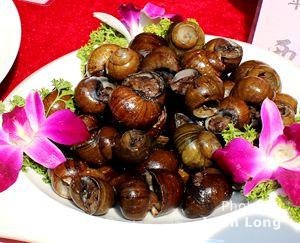
Fried River Snails
Traditionally, river snails are an indispensable food for the Mid-Autumn Festival dinner for people in Guangzhou. River snails are usually cooked with medicinal herbs to dispel their unpleasant odor. Eating river snails during the Mid-Autumn Festival is believed to help brighten the eyes.
Taro — Bring good luck
Eating taro during the Mid-Autumn Festival is believed to dispel to bad lack and bring good luck and wealth. The tradition began during the Qing Dynasty (1644–1911).
Wine Fermented with Osmanthus Flowers — Happy life
Drinking wine fermented with osmanthus flowers has a long history in China. Chinese people began to drink such wine over 2,000 years ago. This wine may be preferred because the Mid-Autumn Festival is when the osmanthus flowers are in full bloom. Drinking the wine signifies family reunions and a happy life.
Duck
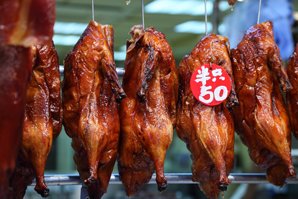
Roasted Duck on sale
People in East China’s Fujian Province have the tradition to cook duck with a kind of taro widely planted in the area during the Mid-Autumn Festival.
Osmanthus flowers duck (salted and baked duck) is a must-eat food for people in East China’s Jiangsu Province. This is the most famous dish of Nanjing, and has a history of over 2,500 years. The dish features crisp skin, tender meat and fat, but it is not greasy.
In West China’s Sichuan Province, people enjoy smoke baked duck. The prepared duck is put in the baked censer and baked with smoke from flaming straw. The duck is cooked when it turns brown, and is then cooked with brine to add more flavor.
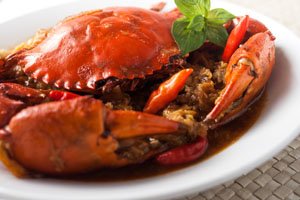
Steamed Hairy Crab
Hairy Crab — a Seasonal Festival Delicacy
Hairy crabs are rich in protein and amino acids.
The hairy crab season is September and October. So it is a special seasonal delicacy for Mid-Autumn Festival, a highlight of the Mid-Autumn Festival reunion dinner, especially around Shanghai. See
Hairy Crab — The Shanghai Delicacy Every Tourist Should Try.


 PETALING JAYA (Aug 24): The Malaysian property auction market saw 6,274 properties worth about RM2.37 billion going under the hammer in 2Q2016. This works out to an average 2,090 properties a month, according to data compiled by AuctionGuru.com.